


Consistent Everywhere: The Art of Omnichannel Branding
Omnichannel marketing isn’t about showing up in more places. It’s about showing up the same way, everywhere that matters.
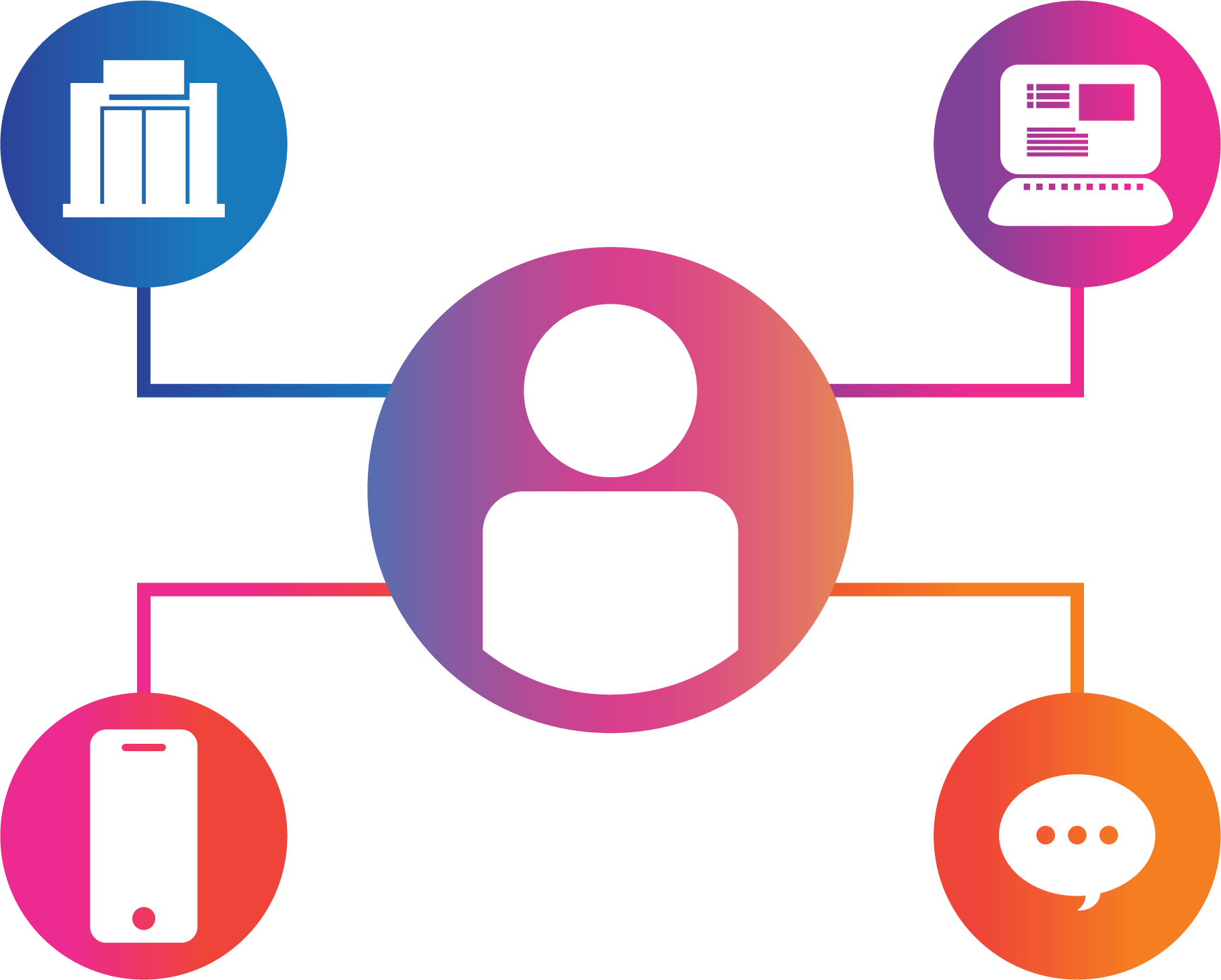
Every touchpoint, your website, social channels, emails, events, and sales materials, should feel like part of a single, cohesive experience. When it does, your brand builds trust faster, communicates more clearly, and performs more effectively. When it doesn’t, it can erode credibility, reduce engagement, and waste marketing spend.
Omnichannel marketing isn’t random distribution. It’s intentional design. Each channel plays a role, but they all work together to tell one story. Take a mobile app or a retail experience. You place an order on your phone, get a confirmation email, and pick it up in store. The experience feels seamless because the brand feels the same at every step.
Consistency Starts with Clarity
Before a brand can be consistent, it has to be defined and built to perform.
Omnichannel success is grounded in a strong, unified marketing foundation. Without it, a brand becomes fragmented and experiences feel disconnected. And when that happens, omnichannel efforts don’t just underperform, they break down entirely.
Your prospects should be able to move from social media, to your website, to an online form or sales conversation and instantly recognize who you are at every step. When that recognition is there, engagement increases, leads improve, and decisions happen faster.
That level of consistency doesn’t happen by chance. It comes from a clearly defined and well-governed brand system, one that goes beyond how you look to define how you communicate and show up, everywhere.
At its core, that system should include:
- Brand voice and tone that guide how you speak across every audience and channel
- Visual identity standards that ensure consistency in design, color, typography, and imagery
- Messaging frameworks that clarify what you say and why it matters
- Positioning and mission that anchor every interaction in purpose
But defining the system is only the first step. It has to be pressure-tested to ensure it’s clear, usable, and built for scale across real-world execution.
That means extending your brand system into practical application:
- Brand color and typography systems
- Logo usage and visibility rules
- Clear, consistent calls-to-action
- Defined value statements
- Tone across audiences and channels
- Product and service messaging
These guidelines provide the guardrails to create alignment across teams, agencies, and platforms so your brand doesn’t drift as it grows.
In an omnichannel environment, where audiences are constantly moving across platforms, consistency isn’t a nice-to-have. It’s the difference between momentum and drop-off.
From Guidelines to Governance
Strong brand guidelines create alignment but they don’t enforce it. In today’s environment, where content is created across internal teams, external partners, and increasingly with AI, guidelines alone aren’t enough. Brands need ownership and that’s where brand stewardship comes in.
Brand stewards act as both protectors and cultivators of the brand. They ensure that voice, visuals, messaging, and experience stay aligned as the brand expands across channels. Instead of one person carrying the full weight of brand consistency, responsibility is distributed across a team. Each steward owns a piece of the brand, working together to maintain cohesion and elevate execution.
This approach to governing the brand protects the integrity and allows it to scale.
Data Drives Direction
Omnichannel isn’t about being everywhere. It’s about being in the right places, with consistency, and that starts with data.
In complex industries, marketing isn’t just about visibility. It’s about building trust and guiding decisions. That requires understanding how your audience behaves, where they engage, and what moves them forward.
Key questions every organization should be answering:
- Where are prospects actually spending time?
- Which channels introduce them to new solutions?
- How do they prefer to engage: email, meetings, events, digital?
- Are they operating in digital, in-person, or hybrid environments?
- How often are they moving between platforms before taking action?
- Which channels drive long-term relationships, not just first touch?
Data provides clarity on where to focus and where consistency matters most. Without it, omnichannel becomes guesswork.
Mapping the Engagement Journey
Decisions don’t happen in a single moment. They happen across a series of connected interactions.
A typical journey might look like:
- Discovery through an industry article or event
- Validation through case studies, content, or a webinar
- Direct engagement via email or website
- Entry into a formal evaluation or sales process
If one touchpoint is inconsistent, unclear, or disconnected, the entire journey weakens. Momentum is lost. Confidence drops.
Omnichannel success comes from reinforcing the same story at every stage.
Creating Flow, Not Friction
Once the right channels are identified, the focus shifts to connection. Each interaction should naturally lead to the next with no gaps, no contradictions and no confusion. When the flow is working, prospects move forward without hesitation. When it’s not, the breakdown is costly.
If a prospect clicks on a targeted email because the message resonates, but then lands on a website where the story has changed and then they hear something different from sales, the entire experience feels disconnected for them. That’s where trust erodes.
Consistency across channels isn’t just about branding. It’s about making it easy for people to move forward with confidence.
Omnichannel Branding Tips
- Understand audience behavior across platforms
- Deliver messaging informed by real data
- Adapt content to fit each channel
- Maintain a consistent brand identity
- Measure, learn, and refine
- Send conflicting or outdated messages
- Copy and paste the same content everywhere
- Ignore in-person and physical experiences
- Leave brand ownership to one person
The Bottom Line
Omnichannel marketing is the evolution of traditional marketing. But success doesn’t come from expansion alone.
It comes from clarity.
It comes from consistency.
It comes from coordination.
When those three are in place, omnichannel stops being a tactic and becomes a system, one that moves people from awareness to action with confidence. For organizations willing to invest in that foundation, the result is clear: stronger engagement, deeper trust, and measurable growth.
And most importantly, a brand that shows up the right way, every time.